Free EPOS Software Explained: What Is Included and What May Cost Extra
Free should describe the software licence, not the whole setup. Here is how to read a free EPOS offer, what may cost extra, and how Ordeer's model works.
Ordeer Editorial TeamChecked by the Ordeer Product Team5 min read
On this page
"Free EPOS software" should describe the software licence, not imply that every part of a complete setup is free. Hardware, payment processing, optional support, installation, ecommerce services or specialist work may still be separate, depending on the provider.
That single distinction resolves most of the scepticism, and most of the marketing fog, around the word "free". This guide shows how to read a free-software offer from any provider, which costs are normal and reasonable to pay separately, and exactly how Ordeer's own model works. If you are still working out what an EPOS system is in the first place, start with the pillar guide.
What "free software" can mean
When a provider says the software is free, it can mean several different things:
- A free licence, genuinely. The till software costs £0 to use, and the provider earns from other parts of the setup, openly priced.
- A free tier. A limited edition is free, and the features most businesses need sit in a paid tier.
- A free period. The software is free for some months, then a subscription begins.
- Free with conditions. The software is free only alongside a specific contract, most often for payment processing.
None of these is automatically wrong, but they are different products. The test is simple: ask what the software costs in month thirteen, and what you are required to buy to keep it.
Software versus hardware
An EPOS setup has two obviously different kinds of cost, and it is fair for a business to pay for one and not the other.
Software is the till interface, product catalogue, reporting and record-keeping. Its cost to a provider does not rise each time one more café uses it, which is why a genuinely free licence can be a sustainable model rather than a trick.
Hardware is physical: the till screen, receipt printer, cash drawer, scanner, card terminal. Someone manufactures every unit, so hardware is almost never truly free. When it appears free, its cost usually lives somewhere else, most often inside a contract or a processing rate.
A transparent provider keeps this line visible: software priced as software, hardware priced as hardware.
Payment processing
Card payments involve a processing service, and processing carries fees, typically taken as a small percentage of each transaction. Practical points when reading any offer:
- Processing fees are normal. Every business accepting cards pays them, with any provider.
- The question is the rate, its structure, and whether it is subsidising something advertised as free.
- Ask whether the till setup requires the provider's processing, or works alongside other arrangements.
Get the answer in writing. On typical card turnover, processing usually matters more per year than modest differences in software pricing.
Optional support and services
Support is where honest models differ most visibly. Some providers include basic support with the software; some price support as an optional plan; some charge per incident. Optional and clearly priced is a perfectly good answer. What to check:
- what help is included with the free software, if any;
- what a paid plan adds, what it costs, and whether you can cancel it;
- when support is available, relative to your trading hours.
Setup, training, data migration and ecommerce work
Beyond the till itself, real projects sometimes need real work: building the first menu or product catalogue, importing data from an old system, training a team, or connecting online selling. These are services, and services cost someone's time. The fair questions:
- Which of these can you do yourself with the tools provided?
- Which are offered as paid services, and at what price?
- Which are required before you can trade at all?
A setup you can genuinely do yourself keeps the free software free in practice, not only on paper.
Questions that uncover the total cost
Put these to any provider, including us:
- What does the software cost now, and after any introductory period?
- Which features sit outside the free software, if any?
- What hardware do I need on day one, and what does it cost?
- Who provides payment processing, and what are the fees?
- Is any contract or minimum term attached to the free software?
- What does support cost, and can I cancel it?
- What would leaving cost me, in money and in data?
Free, optional and separate: the honest ledger
For each provider you compare, sort every part of the setup into three columns. The exercise takes ten minutes and removes the fog completely.
| Part of the setup | The honest question | Column |
|---|---|---|
| Till software licence | Is it £0 with no time limit and no forced bundle? | Free, if truly so |
| Feature set | Are the features you need in the free software? | Free or a paid tier |
| Support plan | Is it included, optional or required? | Free or optional |
| Till hardware | Bought, rented or bundled into a contract? | Separate |
| Card processing | What rate, and is it required? | Separate |
| Setup and training | Self-serve or paid service? | Optional or separate |
| Ecommerce services | Included tools or commissioned work? | Optional or separate |
A provider whose offer sorts cleanly into these columns is easy to trust. An offer that resists the sorting is telling you something too.
Ordeer's model, as currently published
Applying the same ledger to Ordeer, using only what the site publishes today:
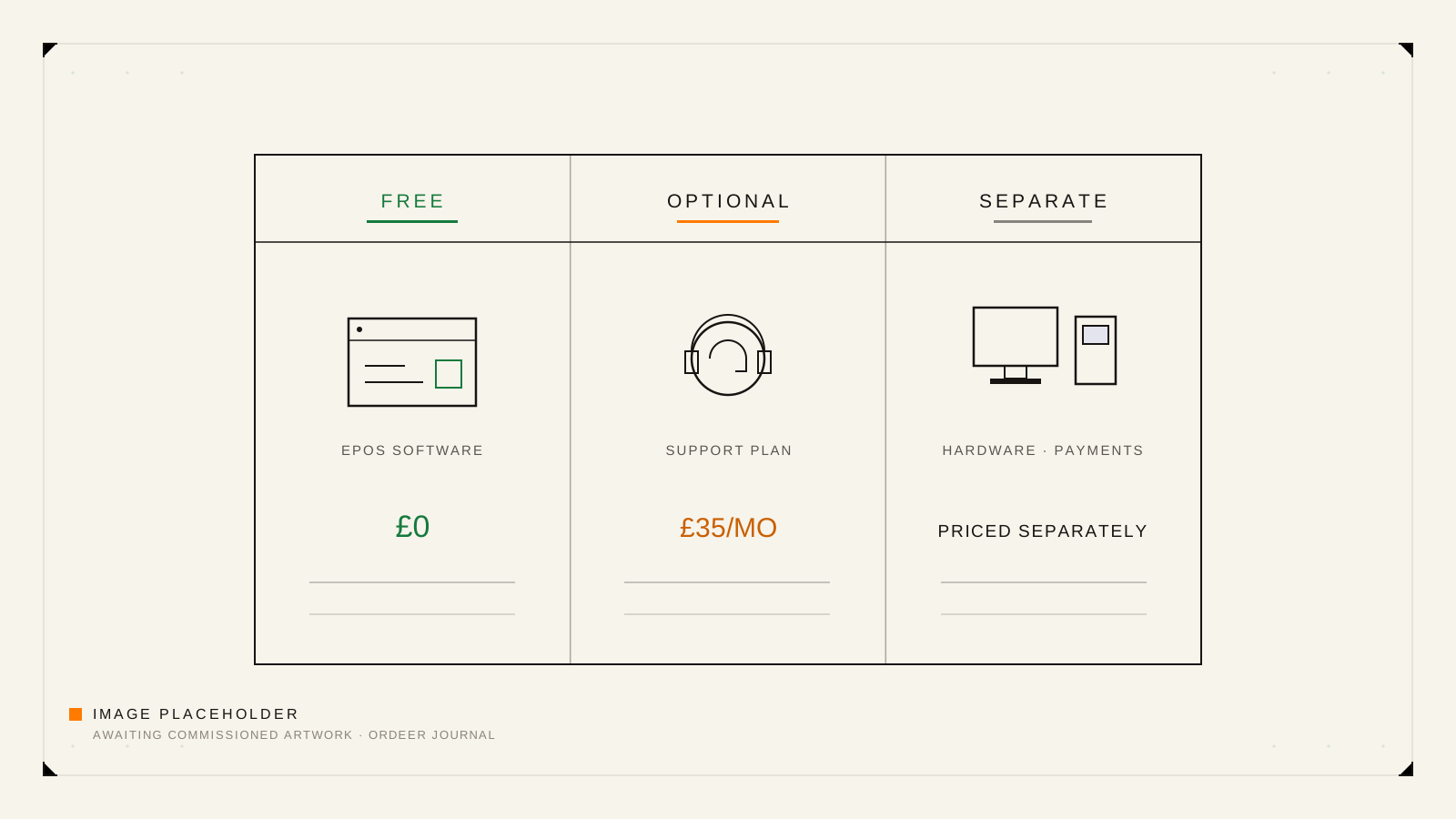
- Free. The EPOS software: full-featured and free forever, not a trial and not a stripped tier.
- Optional. A support plan at £35 a month, which can be cancelled.
- Separate. Hardware, which is purchased separately, and card payments, which are provided through a payment-gateway partner.
That is the whole shape. Current details and anything time-sensitive live on the pricing page, and the resources hub collects the related guides.
Frequently asked questions
Is free EPOS software really free?
It can be, when "free" describes the software licence itself with no time limit and no forced bundle. Confirm what the software costs after year one and what you are obliged to buy alongside it; those two answers separate genuine free licences from introductory offers.
Is EPOS hardware normally included?
No. Hardware is physical equipment and is normally bought or rented separately with any provider. Treat "free hardware" claims carefully: the cost usually sits inside a contract or processing rate instead.
Are card-processing fees separate?
Yes, as a rule. Processing is a per-transaction service and its fees apply whoever your provider is. Compare rates and structure in writing rather than assuming free software means free processing.
Do I have to buy support?
With some providers support is included; with others it is an optional paid plan; occasionally it is required. Optional and cancellable is a reasonable model. Ask what the free software includes without it.
What should I compare besides the monthly price?
Year-one totals: software, hardware, processing fees on your realistic card turnover, support, setup services and any exit cost. Two offers with identical monthly prices can be hundreds of pounds apart on that total.